
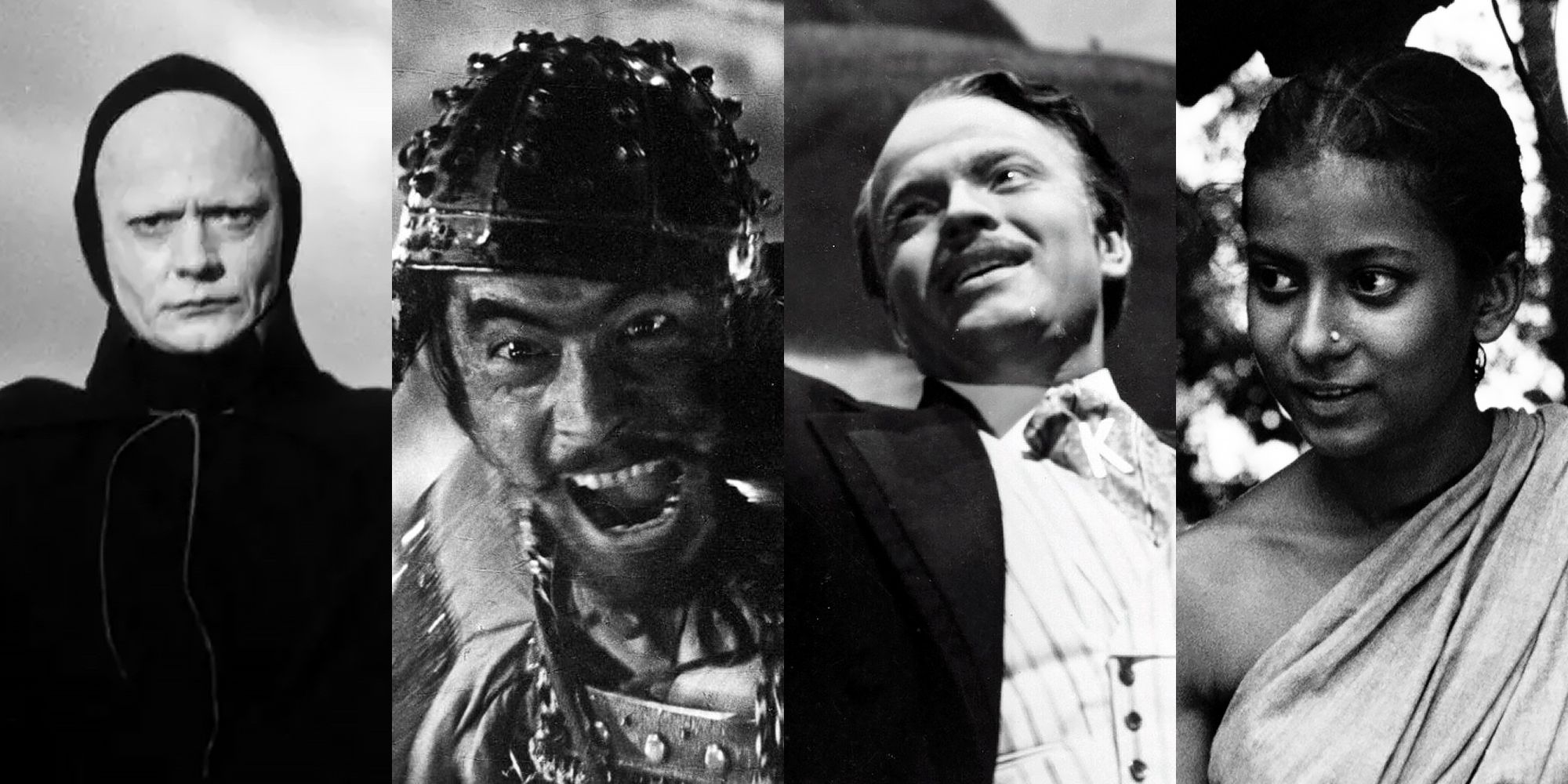
Good directors generally make good movies.But have you ever wondered which films inspired these great directors to make films? Martin Scorsese To Akira Kurosawaeach influenced by an iconic film, incorporating elements of it into their work at some point in their film career.
These movies are not mainstream Hollywood blockbusters. Most of them are foreign movies. Nevertheless, they both changed the face of cinema in general and influenced the vision of contemporary directors who pay tribute to them throughout their work.
“Seven Samurai” (1954)
epic drama seven samurai (Japan: seven samurai) was co-written, edited and directed by Akira Kurosawa. In addition to being the longest and most expensive Japanese film made at the time, the film was (and still is) highly praised by critics and directors, earning a near-perfect metascore of 98. I’m here.
Aside from the loose remake for American audiences — John Sturges‘ Magnificent Seven — cinematic replacement of samurai with cowboys John Landis‘ Three amigos! (1986), John Lasseter When Andrew Stantonof bug’s life, Quentin Tarantinoof django unchained When Hateful Eight, Lana When Lily Wachowskiof matrix revolutions, George Millerof Mad Max Fury Road, When George Lucas‘ Star Wars Each of the franchises gave a nod to Kurosawa’s masterful camera tricks and framing techniques.
“400 Strikes” (1959)
Francois Truffaut — he himself was influenced by the film Alfred Hitchcock — made his landmark directorial debut with a coming-of-age film 400 hits (French: Les Quatres Saint Coup). He won Best Director at Cannes and paved the way for the French New Wave movement.
Films are considered by filmmakers Luis Buñuel (Belle de Jour) When Satyajit Ray become one of their favorites. Martin Scorsese included it in his list of important foreign films, and Akira Kurosawa called it “one of the most beautiful films I’ve ever seen.” woody allen When Sam Mendes was ranked 13th in the British Film Institute (BFI) Directors’ Choice 100 Greatest Movies of All Time. John Singletonof boyz the hood, Tom Twikerof Run Lola Run, When Alfonso Cuaronof Y to Mama Tambien Includes imitative scenes 400 hits.
“8½” (1963)
surrealist drama 8½ (Italian: Otto et mezzo) is the benchmark for arthouse films by Italian directors. Federico Fellini Regularly praised for its cinematic brilliance. So much so that he was ranked 4th in the BFI’s 100 Greatest Movies of All Time poll, with 40 directors voting for it. It also won the Academy Award for Best Foreign Film and Best Costume Design.
Regardless of theme or style, the following directors borrowed from Fellini’s masterpieces: Woody Allen, stardust memories; Charlie Kaufman, synecdoc, new york; Todd Haynes, I’m Not There; Bob Fosse, all that jazz; peter greenaway, 8.5 Women; François Truffaut day for night; When Terry Gilliam, Brazil.
“The Seventh Seal” (1957)
modern day director Michael Apted (gorilla in the fog, Gorky Park), Woody Allen, Polish director Krzysztof Zanussi Vote for the Swedish author Ingmar Bergmanhistorical fantasy the seventh seal (Swedish: Det sjunde inseglet) in the BFI Directors’ Greatest Films Poll.
An existentialist film about the conflict between darkness and light. the seventh seal, He helped launch the international art house movement, and its rigorous cinematography has inspired filmmakers ever since. Subsequent diverse directors, including Martin Scorsese, Guillermo del Toro (nightmare alley), When Paul Verhoeven (basic instinct, show girl) — turned to this classic for inspiration. Antonius Block (Max von Sydow) play chess with Death (Bengt Eckerrot) was parodied by peter hewitt of Bill and Ted’s False Journey.
“Treasures of the Sierra Madre” (1948)
With a metascore of 98, Treasures of the Sierra Madre by director John Huston Set the Western benchmark. Its restrained, simplistic camerawork and slow burn to utter unease are referenced by many directors.
Stanley Kubrick named Treasures of the Sierra Madre It’s my fourth favorite movie of all time and reflects the dramatic ending of his films killingThe main character’s (Humphrey Bogart) The fedora and unshaven look are associated with George Lucas and Steven Spielberg Create an Indiana Jones character. Paul Thomas Andersonof There Will Be Blood It capitalizes on the theme of the film, the corrupting effects of greed.and climax David Finchers panic room I’m using an image similar to Houston.
“Breathless” (1960)
crime drama I can not breathe (French: ab de soufflé) by director Jean-Luc Godard — with François Truffaut 400 hits — brought international attention to the new style of French filmmaking. This included using the then-unconventional jump cut and breaking the fourth wall.
Jim McBride Remade in 1983, but by a fellow director Jim Jarmusch (stranger than paradise), Arthur Penn (bonnie and clyde), Martin Scorsese (average street), When Steven Soderbergh (Schizopolis) have all turned to Godard’s new wave classics for inspiration.
“Good Guys, Bad Guys, Ugly Guys” (1966)
extreme close-ups, vast wide-angles, tight edits, Ennio Morriconescore making Sergio Leonespaghetti western food good things, bad things, ugly things (Italian: Il Buono, il brutto, il cattivoMore) masterpiece. Leone’s portrayal of the Wild West as brutal, morally ambiguous, and populated by antiheroes resonated with audiences and future directors alike.
Leone has been a huge influence on Quentin Tarantino’s films.Indeed, Tarantino quotes good things, bad things, ugly things He called it “the greatest achievement in the history of cinema” as “the most influential in my work”.Tarantino paid homage to the film reservoir dogHe hired Morricone for the standoff scene to produce the soundtrack for his later film. Hateful Eight. Work of Robert Zemeckis, Sam Raimi, When Robert Rodriguez I was also inspired by good things, bad things, ugly things.
“Pasar Panchali” (1955)
directorial debut in peter panchali, Satyajit Ray’s brutally honest and humanist portrayal of life in a poor rural Bengal village in the 1920s. In making his films, Ray himself was influenced by Italian directors. Vittorio De Sicaneorealism films bicycle thief (Radri di Biclette) (1948).
the beauty and sorrow of peter panchali inspired Wes Anderson‘s obsession with India is evident in his films Darjeeling LimitedIn a 2007 interview with an Indian newspaper, politician, Anderson said he was committed Darjeeling to Bengal coach. Christopher Nolan called peter panchali “One of the best films ever made. It’s an extraordinary piece of work.” It means to exist in,” he says somewhat poetically.
“Battleship Potemkin” (1925)
A silent film from nearly 100 years ago, Sergey Eisensteinof Battleship Potemkin (Russia: Bronenosets Potemkin), a dramatization of the famous mutiny on board an Imperial Russian Navy ship, has been referenced by many contemporary directors, most notably the iconic Odessa steps scene.
The Odessa staircase scene was recreated by Terry Gilliam. Brazil, Brian De Palma of untouchableWhen George Lucas of Star Wars: Episode III – Revenge of the Sithas well as being parodied by Woody Allen in banana When love and death.
“Citizen Kane” (1941)
Quadruple Threat Writer, Producer, Director and Star orson welles made his directorial debut in citizen cane With it, Welles unleashed a series of cinematic innovations, from the film’s stitched-up flashback narrative structure to its deeply focused camerawork that contributed to the film’s rare Metascore of 100, showing universal acclaim. I was.
List of directors I admired and learned from citizen cane long. John Huston is Maltese falcon copied that long take asphalt jungle; David Lean adopted Wells’ narrative approach in Lawrence of ArabiaAkira Kurosawa’s Rashomon and Paul Thomas Anderson magnolia often compared to citizen cane Regarding the complex plot structure told through multiple characters. For Martin Scorsese, the Honorable Charles Foster Kane inspired Michael Corleone (Al Pacino) of godfather and Jake LaMotta (Robert De Niro) of Raging Bull. Kenneth Branagh (Death of the Nile) called the film “a film that aspires and unabashedly expresses great art and political significance”.
Comments
Post a Comment