
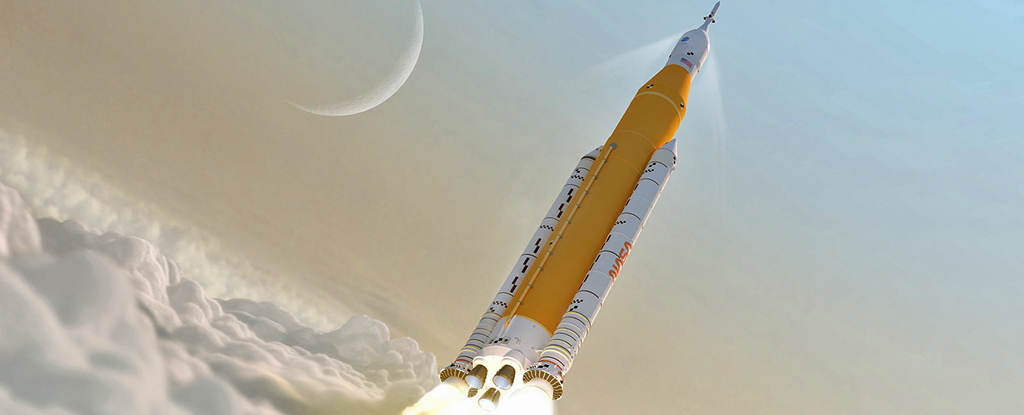
After a half-century hiatus, NASA’s Artemis 1 mission is poised to take a crucial step towards returning humans to the moon.
Mission scheduled to launch on Monday, August 29, 2022 [8:33 am Eastern Time]is a shakedown cruise (no crew) on NASA’s Space Launch System and Orion Crew Capsule.
The spacecraft will travel to the moon and deploy several small satellites before going into orbit. NASA aims to practice spacecraft operations, test the conditions experienced by the crew on and around the Moon, and ensure everyone that the spacecraft and crew return safely to Earth.
In a conversation, Jack Burns, a professor and space scientist at the University of Colorado Boulder and former member of NASA’s presidential transition team, describes the mission and what the Artemis program promises for space exploration. Space programs have changed in the half-century since humans last set foot on the moon.
How is Artemis 1 different from other regularly launched rockets?
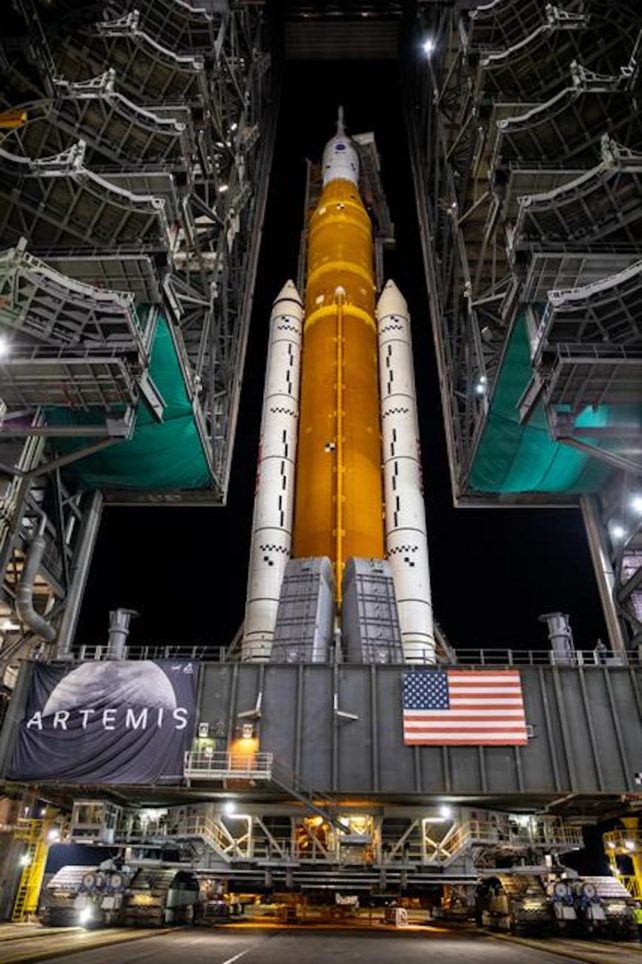
Artemis 1 will be the first flight of the new Space Launch System. As NASA refers to it, this is a “heavy duty” vehicle. It will be the most powerful rocket engine ever flown into space, more powerful than Apollo’s Saturn V system that took astronauts to the moon in the 1960s and his 70s.
It is a new type of rocket system as it has both a combination of liquid oxygen and hydrogen main engines and two strap-on solid rocket boosters derived from the Space Shuttle. A hybrid of the Space Shuttle and Apollo’s Saturn V rocket.
Testing is very important as the Orion Crew Capsule will be your actual training. Stay for one month in the space environment of the moon, which has a high radiation dose.
And, very importantly, testing the heat shields that protect the capsule and its crew as they return to Earth at 25,000 miles per hour. This will be the fastest capsule re-entry since Apollo, so a well-functioning heat shield is critical.
The mission will also carry a series of small satellites that will be placed in lunar orbit.
They will do some useful precursor science, from investigating more of the permanently shadowed craters that scientists believe hold water, to making more measurements of the radiation environment. .
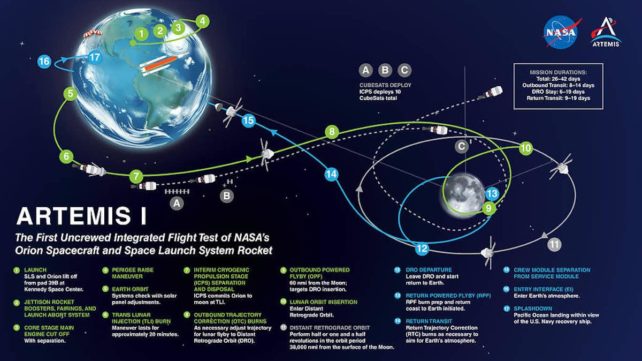
What are the goals of the Artemis project? What is planned for the launch chain?
The mission is the first step towards Artemis 3, which will be the first manned mission to the Moon in the first 21st century since 1972. Artemis 1 is an unmanned test flight.
Astronauts will be on board Artemis 2, which is scheduled to launch a few years later. It will also be an orbital mission very similar to Apollo 8’s orbital return to the Moon. Astronauts will spend more time orbiting the moon, testing everything with a human crew.
And finally, it will lead to a journey to the lunar surface, where Artemis 3 – which could be mid-decade – rendezvous with a SpaceX starship and mobile crew.
Orion will remain in orbit and a lunar starship will bring the astronauts to Earth. They will go to the South Pole of the Moon to explore areas never before explored by scientists and to study the water ice there.
Artemis is reminiscent of Apollo. What has changed in the last half century?
Kennedy’s first envisioned Apollo reason was to beat the Soviet Union to the moon. While the administration had no particular interest in space travel or the moon itself, it clearly represented a bold goal to put America first in space and technology.
The downside to doing that is the old saying, “Live by the sword, die by the sword.”
When the US reached the moon, it was basically game over. We beat the Russians. So I put down some flags and did a science experiment. However, shortly after Apollo 11 and a few more missions, Richard Nixon canceled the program due to political objectives.
Fast forward 50 years. This is a very different environment. We are not doing this to beat the Russians or Chinese or anyone else, but to start sustainable exploration beyond Earth’s orbit.
The Artemis program is driven by various goals. This includes in-situ resource utilization, which means using resources at hand such as water ice and lunar soil to produce food, fuel and building materials.
The program has also helped establish a lunar and space economy, starting with entrepreneurs. That’s because SpaceX is a big part of this first lunar mission.
NASA doesn’t own the Starship, but it does buy seats so astronauts can reach the surface. SpaceX will then use her Starship for another purpose. That is, to transport other payloads, civilian astronauts, and astronauts from other countries.
Thanks to 50 years of technological development, going to the moon is now technically feasible at a much lower cost, and understanding computer technology allows for much more advanced experiments.
The last 50 years of technological advancement have been a complete game changer. Almost anyone with the financial resources can send a spacecraft to the moon, but it doesn’t have to be manned.
NASA’s Commercial Lunar Payload Service contracts with private companies to build unmanned landers to the Moon. My colleague and I have a radio telescope heading to the Moon on his one of the landers in January. That would have been impossible 10 years ago.
frameborder=”0″ allow=”accelerometer; autoplay; clipboard writing; encrypted media; gyroscope; picture-in-picture” allowfullscreen>
What other changes are planned for Artemis?
The government says it is very likely that Artemis 3, the first manned spacecraft, will have at least one woman and a person of color. they may be identical. There may be several.
Young kids today looking up at NASA say, “Hey, there’s an astronaut who looks like me. I can do this. I can be part of the space program.” Because you can say .
Jack Burns, Professor of Astrophysics and Planetary Sciences, University of Colorado Boulder
This article is reprinted from The Conversation under a Creative Commons license. Please read the original article.
Comments
Post a Comment