
Courtney Cole, WBZ-TV
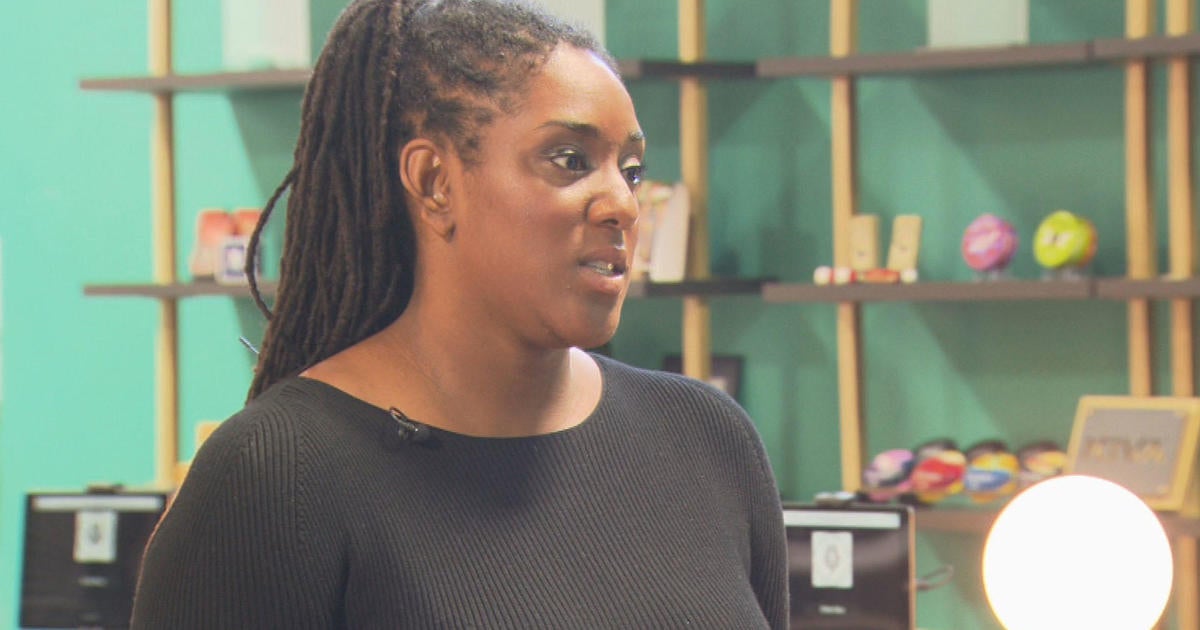
Charlestown-Boston is now home to the first cannabis dispensary owned by a black woman. Nike John, founder of Charlestown’s Heritage Club, said he was thrilled to invite people to experience the space.
“The absolute best part of our opening was the second day. I said it was the place.’ And I thought that’s why I made this,” John explained.
This milestone comes six years after cannabis was first legalized in Massachusetts and three years after the City of Boston created the Cannabis Equity Program to diversify Boston’s industry. rice field.
WBZ’s Courtney Cole examines the challenges pharmacy owners faced along the way and how the city’s programs are impacting the face of the local industry.
From the moment you step into The Heritage Club’s meticulously curated space, you’ll know that this is more than just a shopping experience, it’s also an educational one.
Nike John, founder and owner of The Heritage Club, said: “And I didn’t know why until I heard about the history of fighting drugs and the opportunity for social justice work. She knows I’m really passionate about it.”
The road to opening the doors of Cambridge Street was not an easy one.
“So the process starts with finding a location, specifically in Massachusetts,” John told Cole.
Even with ten years of experience in the real estate industry, John said it was a challenge.
“So if you’re in the process, don’t give up on finding it,” John said.
The pharmacy owner then said it was an outreach to the community.
“Once you have a Host Community Agreement (HCA), you can apply to the state, which kicks off the whole other licensing process. And then I applied to the CCC (Cannabis Control Commission) and got a learner’s license, and then it took me a year from the learner’s license to get my license and open,” John said. .
Not to mention the serious financial investment required.
“All in all, we had over $150,000 in maintenance on the lease alone and had to postpone and negotiate.And the landlord said it was fine.I will support you through this. is,” she told WBZ.
The lack of diversity in the cannabis industry was what drove her to stick with it.
“We wanted to show that black women can run businesses and cannabis like anyone else, and that we need to be part of this industry. Equality is something that continues and is encouraged.” It helps make sure that,” John said. .
She explained that making her business successful is not the end of the story, but also reaching out to help others.
“We have a variety of brands and are committed to showcasing and promoting at least 30 percent of these mission-driven, diverse-owned, women-owned and Black-owned businesses,” John said. Told.
In 2019, the City of Boston passed the Boston Cannabis Commission, the Cannabis Act Equity Rule that created the Cannabis Equity Program, and also created standards on how to designate Boston Equity Applicants.
The goal is to give a more diverse group of people the opportunity to enter the business.
Since the creation of the equity program, the mayor’s Office of Economic Opportunity and Inclusion has said not all cannabis entrepreneurs of color are equity applicants. there is something
-45 Qualified Equity Applicants
-30 Equity Applicant Hosted Community Agreement HCAs (this includes 3 shops open at the state level and shops still in progress)
-9 Equity applicants are still in process (i.e. they are still in the community process and have not yet been heard by the BCB).
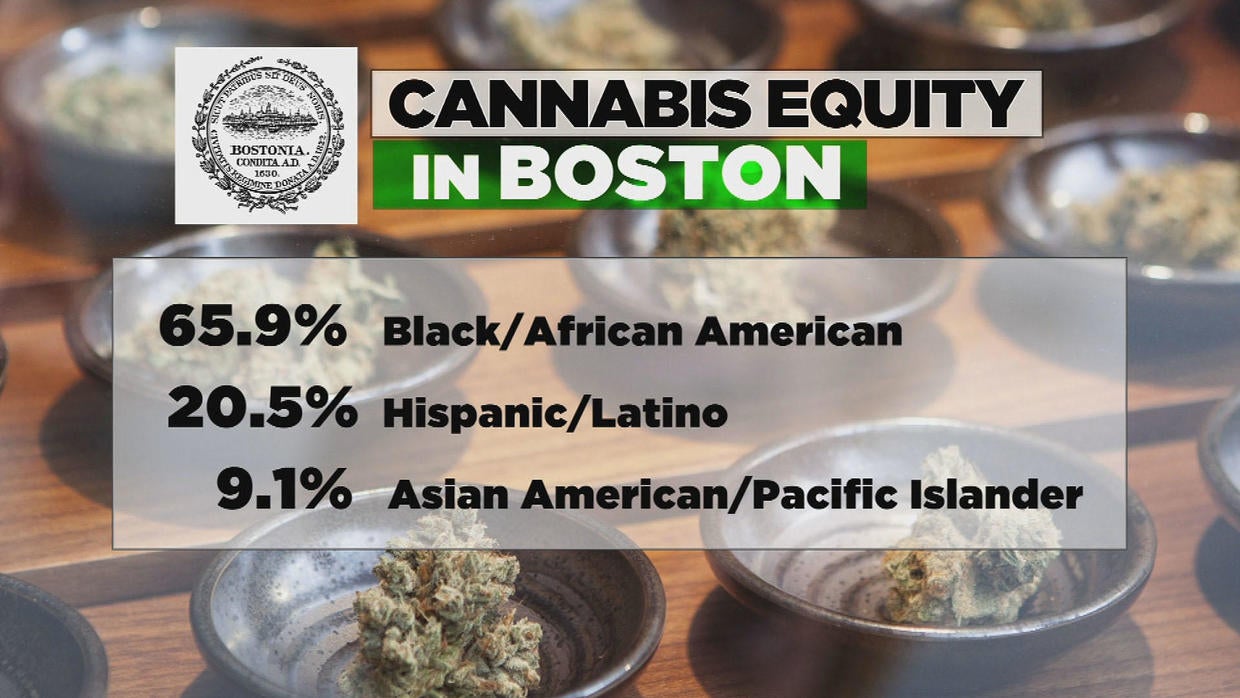
The racial demographic breakdown of equity applicants is as follows:
CBS Boston
John said he’s working to change the story.
“That’s the most exciting and challenging part,” John said. “I think that’s part of it… I get emotional when I talk about it because I know how many people have tried and weren’t approved. I was rejected the first time.” I can do this.”
When Cole asked the mayor’s Office of Economic Opportunity and Inclusion what challenges they still face when it comes to getting more people of color involved in the cannabis industry here in Boston, they said part briefly said:
“One of the big challenges for aspiring cannabis entrepreneurs is finding the right commercial space for their business. Not only are commercial rents high, but cannabis is still federally banned. In addition, Boston has many K-12 schools, and cannabis facilities are located less than 500 feet from any K-12 public or private school. There is also a 0.5 mile buffer zone between cannabis establishments that the BCB strongly takes into account when scoring cannabis establishments and license applications. Both buffers and the search for affordable spaces that allow cannabis make it difficult for applicants to open facilities. We are looking at ways to make it easier for equity applicants to succeed in the industry, providing technical assistance and impartiality-focused policy recommendations.”
For more information, email the city directly: cannabisbiz@boston.gov
.
Comments
Post a Comment