
Having a disability or other limitation doesn’t have to keep you away from wellness activities.
Health guidelines recommend that adults do at least 150 minutes of moderate-intensity aerobic activity or at least 75 minutes of vigorous-intensity activity per week. It doesn’t matter which activity you choose, as long as you can move your body.
But what if an injury, illness, medical condition, disability, or normal aging makes it difficult for you to be active? increase.
What is adaptive sports?
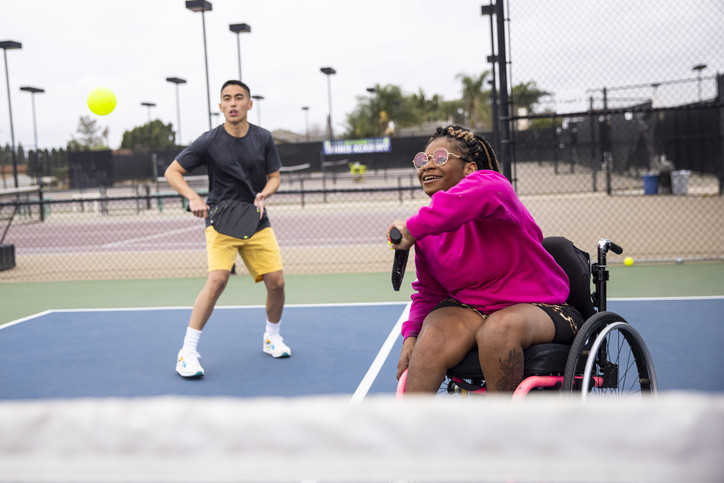
Adaptive sports are competitive or recreational sports or activities for people with disabilities or physical limitations. It is often run alongside traditional efforts, but modified to support people’s specific physical abilities.
“Ultimately, most people will experience some kind of disability that prevents them from exercising regularly, such as mild arthritis, the need for a knee or hip replacement, limited vision, or a more serious physical disability.” A former wheelchair racer who studied medicine and rehabilitation at Harvard Medical School, is a seven-time Paralympic medalist and two-time winner of the Boston and New York city marathons. “But today, thanks to advanced technology and his infrastructure of support, people can find almost any kind of sport or activity that helps them consider their abilities and stay active. increase.”
Why is staying active important?
Not getting enough exercise regularly increases your risk of heart disease, stroke, obesity, diabetes, and cancer. It also affects your mood. People with disabilities are also particularly vulnerable because they have difficulty staying active, he says, Dr. Blauwet. “Adaptive sport is a way for us to keep exercising regularly and support our health and well-being in the future.”
Research backs this up. Studies show that people who participate in adaptive sports and activities report better overall health, quality of life and social life.
How can I find out about adaptive activity options near me?
You can find state and local adaptive sports programs and accessible activities through the websites of the National Center on Health, Physical Activity and Disability and the Challenged Athletes Foundation. “These programs also help you find the mentors, coaches and support systems you need to be successful,” says Dr. Blauwet.
What sport or activity you ultimately choose depends on your interests and level of functioning, but there are many options.
Taking advantage of strengths and considering new activities
Dr. Blauwet shares other strategies that can help transition to adaptive work.
Look at your current form of exercise. “Almost all kinds of sports and activities can be adapted to suit people with disabilities, so there is a good chance that they will continue to do what they love,” says Dr. Blauwet.
For example, former Arizona international Gabby Giffords, an avid cyclist who suffered brain damage after an assassination attempt as part of ongoing treatment, now rides a recumbent bike because of paralysis on her right side and balance problems. increase. (A recumbent bike is a tricycle that puts the rider in a sitting or loosely reclining position.)
Other sports and activities can be changed as well. For example, a dedicated golf cart allows him to swing the club while standing and stabilizing. Sledge hockey uses a sled to slide across the ice.
Focus on your strengths. Focus on what you can do instead of focusing on what you can’t do. Running is no longer an option? How about power walking with a cane? Can’t you use your legs? Focus on upper-body activities like swimming or kayaking. Low vision? Guides are available to assist with walking, running and biking.
join the team. Many adaptive sports organize team leagues with coordinated rules and formats, such as wheelchair basketball and tennis, or “beep” baseball and kickball for the visually impaired. “These are a great way to raise awareness about your new endeavor and build community with other peers with similar disabilities,” he says, Dr. Blauwet. “Plus, a little competition keeps you motivated.”
Try something new. Use your new feature status as an opportunity to try another sport or activity. “Experience the water, try the things you’ve always been interested in,” says Dr. Blauwet.”Now is the ideal time for him to enjoy water skiing, windsurfing, horseback riding and rock wall climbing.” It may be time.”
Adapting to adaptive sports and activities can be difficult mentally and emotionally because your disability feels like it has magnified. But don’t let that deter you, he adds Dr. Blauwet. “Staying committed to staying active and investing in your health can help reduce and eliminate any negative stigma you may be feeling. is a better way of life.”
.
Comments
Post a Comment