
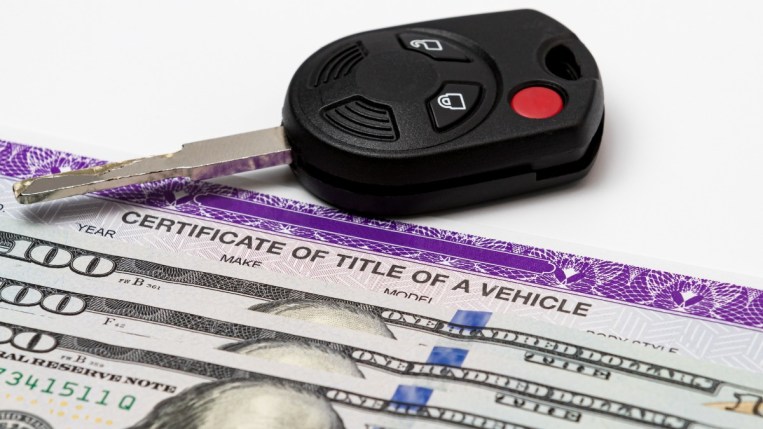
There are many reasons why you might need a new or updated car title. The most obvious and common is that you have misplaced it. Depending on how careful you are about keeping documents such as social security cards, birth certificates, and deeds to your home, you may not be able to find your car’s title.
However, there are other reasons too, such as a house fire destroying your car’s title, a burglary stealing it along with other papers, a flood making it illegible, or a dog eating it. Either way, it’s missing.
If you notice that the title is missing, sooner or later you will have to fix it. You don’t need it until you sell, trade in, or dispose of your car. However, if you move to another state, you may also need it to re-register your vehicle. I don’t want to scramble at the last minute to secure a replacement title when this happens. Most states take longer to mail new titles, sometimes 2-6 weeks.
Here’s a high-level overview of how to secure your replacement title and the background documentation you’ll need to complete the process.
One thing to keep in mind, however, is that individual states administer domains for owned vehicles, and each creates its own requirements regarding ownership replacement. Some states require the title to be updated if they change their name.
What is the car title?
A car title proves the ownership of the vehicle. This is a legal document issued by the state that identifies a particular vehicle and its owner. When a car changes ownership, the owner’s identity changes, but the car’s identity always stays the same. For example, the title includes the vehicle identification number (VIN), year of manufacture, make, model, and color of the car.
You can only get the original title if you own the vehicle outright. In other words, if you financed a car with an outstanding balance and payments, there is no original ownership. You won’t get the original until you pay the full price of the vehicle. If you financed the car and have title to it, it is a copy that shows the finance company as the lien holder.
Similarly, with a lease, the car is not yours and you do not own it unless you purchase the vehicle at the end of the lease. A lease is like a long-term rental. The lessor retains title and ownership.
What do I need to replace my car title?
Each state has requirements and procedures for replacing a car’s title. Check with your state to see what specific documents are required. However, as a rule of thumb, I would expect it to produce:
- Vin: The chassis number of the vehicle. It is etched on a plate attached to the leftmost driver’s side of the dashboard where it meets the windshield. It is often also found on a plate or sticker on the driver’s side door jamb.
- Year, make and model: The year is the year of the car, the manufacturer is the manufacturer, and the model is the nameplate of the car. For example, 2019 Chevrolet Malibu is year, make and model.
- License plate: You must provide the vehicle’s current license plate number and issuance status.
- Odometer reading: In the driver’s gauge cluster, an odometer tracks total mileage off the assembly line.
- Proof of ownership: You must prove that you own the car. A notarized bill of sale or vehicle registration form may be required to prove ownership.
- Lienholder: If present, it is the entity funding the vehicle. You must identify the lien holder and provide their contact information. Some states also require the lien holder to sign a form authorizing the release of a copy of the title.
- Driver’s license: You will need to show a photo ID and possibly a current utility bill. Most states accept a variety of photo IDs.
- price: There is some charge for the service. You will need to confirm the cost and method of payment (cheque, credit card, debit card, etc.) in advance.
state requirements
We researched a few examples because different states require different things. Some states allow online applications, others do not. The information covers applying for clean title replacements. That is, a simple exchange rather than a more complex issue such as change of ownership.
New York
The Empire State can apply for alternate titles online, by mail, or in person at the DMV site. Whichever option you choose, you must complete a duplicate title application. You will need your VIN, license plate number, and personal information to complete it. The application fee is $20.
To apply by mail, you must submit a completed Duplicate Title Application and a copy of your New York State driver’s license, learner’s permit, or non-driver’s ID. We also accept US passports or passport cards, military photo ID cards, and other legal forms of ID. You must also include a check for a $20 handling fee.
To go to the DMV office, you will need to bring your application, ID, and a $20 fee.
California
In this state, you can apply for a replacement title by mail or in person at the DMV office. The DMV will mail the alternate title to the applicant within 15-30 days.
This process requires a complete replacement application form, either by mail or in person. This includes his VIN, make, model, year of manufacture, and license plate information for the vehicle. If necessary, we will need the name and contact information of the lien holder. You may also need a vehicle verification form that must be completed by an approved state agent, such as a DMV employee. State officials will check odometer readings, VIN, etc.
Mail-in applications require a copy of an approved government-issued ID. For example, you can copy a driver’s license or non-driver ID. For in-person applications, original photo ID is required.
texas
The Lone Star State may apply for replacement titles by mail or in person. It costs $2 by mail, but $5.45 if you apply in person. Whichever way you apply, you will need to complete a “Certified Copy of Title” application. Texas is fairly liberal in the types of photo ID it accepts. The list is long and includes common driver’s licenses and non-driver IDs. As with other states detailed above, if you apply by mail, you must provide a copy of your approved ID. For in-person, you must present your original ID.
16 cities, including Dallas, Austin, Fort Worth, San Antonio, and 12 others, require you to apply in person. However, there are pitfalls. Cities that offer in-person applications must apply in person. The only exception is Wichita Falls, Texas. That her DMV address is where all email applications are received.
Are replacement titles available online?
In this world where all kinds of businesses can be traded online, you might think this applies to exchanging car titles. Above he is an example of three states, only New York accepting applications for exchange titles online. Again, however, New York restricts online applications to New York residents, replacing titles for which they are listed owners.
Check with your state DMV.
What if the car is not in your name?
There are several reasons why you may need to replace a vehicle title that is not in your name. Securing an alternate title if you are not the owner of the record depends on the circumstances and your state.For whatever reason, you should contact your state’s DMV to determine the best course of action. there is.
Perhaps a relative died unexpectedly, leaving behind a car with no title to be found. Another possibility is that you purchased the vehicle from a private owner who transferred title to you, but it was misplaced. Those are two very different situations and he needs two very different approaches to secure an alternative title. Additionally, there may be other possibilities that we haven’t considered.
There is no generalized answer if the title you are trying to replace is not your name. However, there are some possibilities for his two examples above.
Death and Inheritance: Regardless of whether the deceased made a will or not, the property left behind remains legally part of that person’s estate. Someone acts as executor of the estate, fulfilling any outstanding financial obligations and distributing the remaining assets. If there is a will, the probate court will oversee the process. Once the property is settled, beneficiaries can easily apply for new ownership. Simply obtain the old title, the previous owner’s death certificate, and proof of the release of the property from the probate court (if applicable).
All is not lost, however, if the title is missing. Proof that you are the beneficiary (what the executor or court can provide) and a death certificate are required. You must also provide all the usual vehicle identification information such as VIN, year, make, model and color. You will also need an odometer. Your state may require other documents and fees, but it is possible to obtain the title under these circumstances.
Lost transfer title: The first action in the event of loss or damage prior to filing transferred ownership with the state is to contact the previous owner. The easiest way for you is to get the person to apply for an alternate title and convince them to sign it for you. Offer to pay fees and other related costs. In addition to filing a lawsuit, if the previous owner cannot be found, or if the owner does not cooperate, you can apply for the right of bond.
Titles branded as guaranteed are titles with a guaranteed warranty. It’s a way to establish ownership if there is a problem with ownership. This includes securing a security deposit from a warranty company against the estimated value of the vehicle. Covers claims made by victims in the event of an ownership dispute. The guarantor company will charge a percentage of the guaranteed amount. The period varies by state, but after three years, for example, you can apply for a clean title. The surety company will retain the security deposit amount you paid.
Steps to replace car title
If you find yourself without title to your car, the best place to start the replacement process is to determine your state’s requirements for title replacement. From there, you should:
- Secure proof of ownershipVehicle registration, bill of sale, etc. should be sufficient in most states.
- complete the applicationAll state websites offer some sort of application to initiate the exchange process. It typically includes vehicle identification, identification information, vehicle odometer readings, and mortgagee information if you are making a payment.
- your IDWhether you apply online, by mail, or in person, you must present photo identification. If you apply online, you can scan it, and if you apply by mail, you can make a copy. Most states accept several forms of ID, including driver’s license, non-driver ID, and military ID.
- form of paymentRegardless of how you apply, most states accept payment by check or money order.
- Submit your application. When I send the request, the timing is different. See below for more information.
How long will it take to get the alternate title?
Most, if not all, states will mail you replacement titles. This will take him 2 weeks to he 6 weeks from the date of application. Your state may offer express service for an additional fee. In some states, the new title can even be reinstated in a day if you apply directly. Check with your state DMV.
Read related articles:
Comments
Post a Comment