
New book chronicles tumultuous history of architectural complexity

The catchy title says it all. Architecture Unbound by Joseph Giovannini is an ambitious attempt to explore the wilds of design and explain how and why a maverick architect ventured so boldly. It is also a broad introduction to the artist who laid the foundation for architectural innovation a century ago. A philosopher and theorist who mapped new ideas and the chaos theory, parametrics and software that have shaped the building of excellence over the past decades into the complexity of his programs.


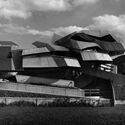

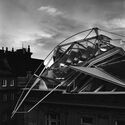
 +9
+9
An 800-page tome with over 1,000 endnotes has the potential to scare everyone but professionals and dedicated students. But in fact, it’s surprisingly readable and well-discussed. It is fortunately free from the academic jargon and repugnant controversies that thrive in this field. A critic who has long defended the avant-garde, you can count on Giovannini’s erudite and vibrant writings. He practices it even on a modest scale, dedicating this study to his wife and daughter for the tolerance of a tilted apartment, the book itself is tilted. Pentagram lays out the text in subtly angled blocks, and its cover pays homage to the master of constructivist typology, Alexander Rodchenko. Captioned images of well-known and unfamiliar buildings abound, along with associated artwork.

Destruction is the overarching theme. The story suddenly jumps from one topic or era to another. The Prologue describes the angular skyscraper housing the European Central Bank in Frankfurt as “the modern Leaning Tower of Pisa”, a badge of acceptance for early anarchist Cope Himmelb(l)au. , Virginia Woolf, Tom Mayne, and a few quotes from Colette in quick succession. An iconoclastic collage by Stanley Tigerman, a radical design from 1983, and a section on how art has moved beyond realism since the 1890s. Please fasten your seat belt. It will be a bumpy flight.
Giovannini, along with Gordon Matta-Clark (who cut the building to pieces) and Lebeus Woods (who built almost nothing, only painted divinely), was a productive and radical man who greatly influenced modern practitioners. Claude Parent, a famous French architect. He praised Frank Gehry’s intuitive approach to design, the modeling by hand and the many iterations his computer-savvy colleagues explored before creating a working document, and Zaha Hadid’s visionary Equally passionate about a drawing and her mastery of sensuously flowing forms. Less convincing is his embrace of Peter Eisenman, the architect whose obsession with underlying geometry yielded a house with cracks in the bedroom floors, and the Cincinnati design and art scene. A strangely distorted Aronoff for his center. Eisenman acknowledged that key decisions about Aronoff were made by a computer, stating, “I don’t know if you like the way it looks, but the issue is irrelevant.” Are users equally indifferent?

Other highly regarded (familiar and predominantly white) talents from Daniel Libeskind to Enric Miralles. From Diller Scofidio + Renfro to Farshid Moussavi, given a few pages each, the book contains many revelations. The emphasis is on graphic presentation. UCSB virtual reality pioneer Marcos Novak exhibited four of his tableaus at his Biennale in Venice 2000. Their swirling, shattered shapes are as thrilling as his NASA images from a galaxy far, far away. Drawings and models made by Moscow schoolchildren show that another generation has inherited the constructivist vision.
Giovannini did a great job of selection and compression, but there are inevitably gaps. Although he admires the avant-garde Soviet artists of the 1920s, especially Erlissitzky and Kazimir Malevich, who had a strong influence on Zaha Hadid, Konstantin he Melnikov, Alexander he Vesnin, and their contemporaries pays little attention to the architectural vision of the Constructivists of The various expressions of early modernism are barely mentioned, and the Bauhaus and its successors are portrayed as if they were a sort of reactionary art school. The author agrees with the widely shared myth that modernism expired around his 1970s. This is thanks to some provocative thesis and the audacious but poorly managed demolition of a complex in St. Louis (Minoru Yamazaki’s Pruitt-Igoe). The poorly maintained public housing and the developers who cheaply built Meath made it less attractive than any thesis. It would be fair to argue that modernism (which simply means “recent” rather than “past”) never disappeared. Several generations of architects have challenged old dogma, and their ingenuity has reinvented modernism, realizing its expressive power in many forms.

MoMA and Philip Johnson are rightly accused here of choosing one aspect of the new architecture, stripping it of its social goals and anointing it as International Style at the 1932 exhibition. (They are also exposed in another exercise in simplification, the 1998 Deconstructivist Architecture Exhibition). Giovannini acknowledged that the theorist could “behave in doctrinaire intolerable esotericism .. like the clergy of architecture”, repeating the mistakes of dogmatic pioneers like Le Corbusier and turning design into his five I tried to boil it down to one point, but ended up ignoring them at Longchamp and Chandigarh. But it is clear that he is tempted by the lack of rules that borders on anarchy, which has created a form-for-form chaos in China, the Gulf States and the emerging cities of Europe.

For better or worse, America has resisted the most daring innovations. It took him 14 years to finance and build his concert hall, and this architect was constantly vilified until it was completed. But his conservatism (or cowardice) has thwarted many dubious proposals. Radicals were invited to contribute their ideas before the lawsuit settled on a mediocre redevelopment of his 9/11 site. United Architects (an ad-hoc team) instead of the World Trade Center he proposed a writhing complex consisting of five linked towers. Giovannini wishes it had come true, but the montage shows it looming over the lower Manhattan skyline, as intrusive as the phallic shafts that now scar Midtown.

The underlying message of the book is that in order to keep up with other arts, architecture must reflect the uncertainties revealed by scientists and philosophers. Indeed, we live in tumultuous times, at the mercy of climate change, social inequality, demagogues and their deluded allies. I need more now. It’s easy to dismiss functionality as trivial, but many of the buildings cited here are out of the context, the program, and the scale of the passing humans. Cities can only house a handful of transcendental icons before they start looking like science fiction movies. Modern architects can offer more than the traditional virtues of firmness, commodities and joy, but those principles are still relevant. And there is a strange sense of detachment from reality in these pages. For example, little mention is made of the architect’s duty to conserve energy and resources, build net-zero buildings, and make cities more livable.

This article originally appeared in Metropolis Magazine.
.
Comments
Post a Comment